UNCP Students Explore the World of C.S. Lewis During Faculty-Led Study Abroad in England
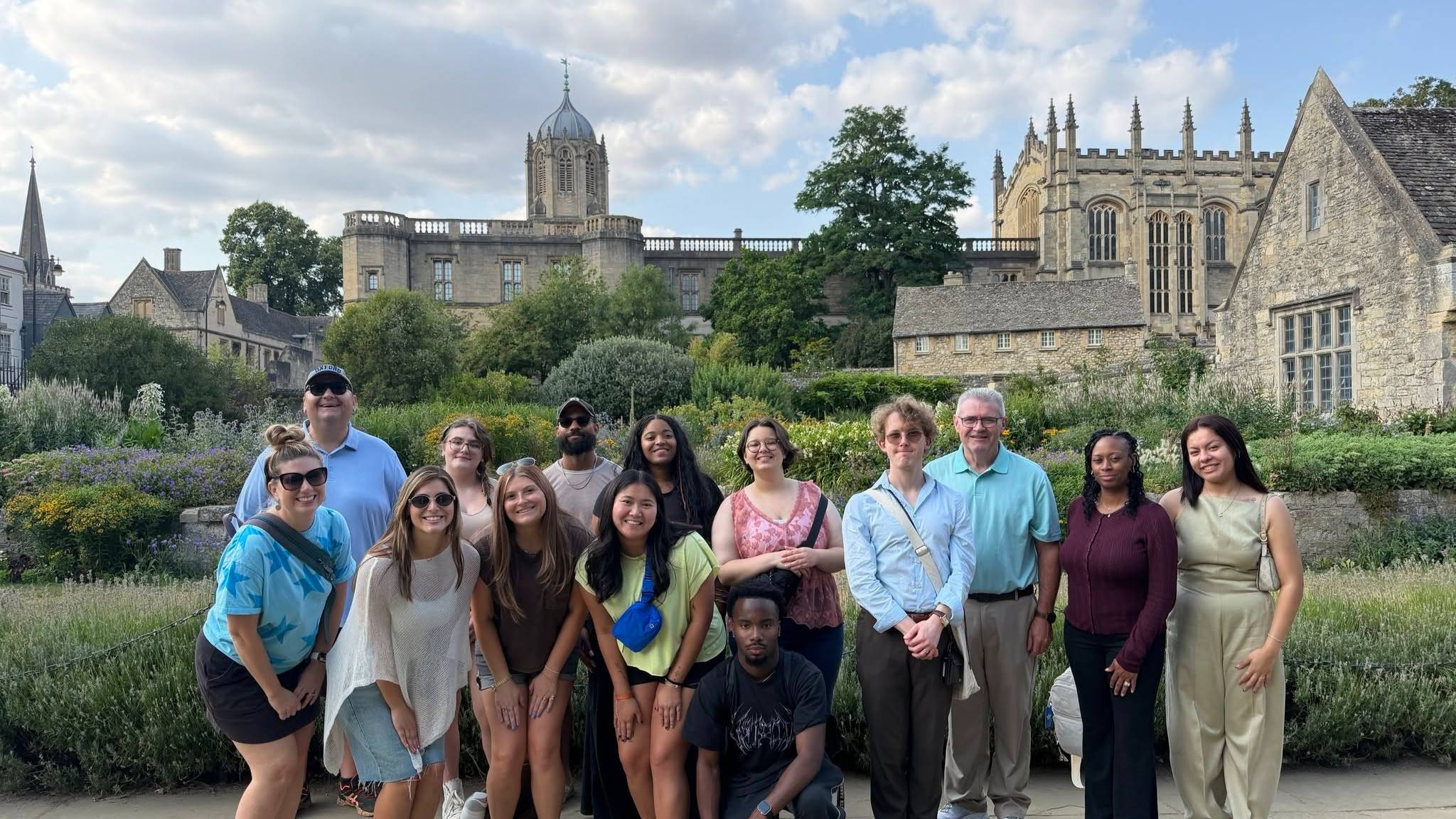
The world of Narnia moved beyond the pages of a book this summer as UNC Pembroke students followed in the footsteps of C.S. Lewis across England.
Through C.S. Lewis’ Narnia: An Adventure in Oxford, Cambridge, and London, students took their learning beyond the classroom, traveling to the places where Lewis lived, studied and taught while exploring the people, history and intellectual traditions that shaped one of the 20th century’s most celebrated authors.
The study abroad course, co-led by Dr. Ashley Allen, associate dean and professor of Psychology, and Dr. Nick Petrov, assistant professor of Religion, combined weeks of coursework and preparation with an immersive experience in England. Along the way, students examined Lewis’s literary, philosophical and religious legacy while experiencing the universities, churches, homes and communities that influenced his life and writing.
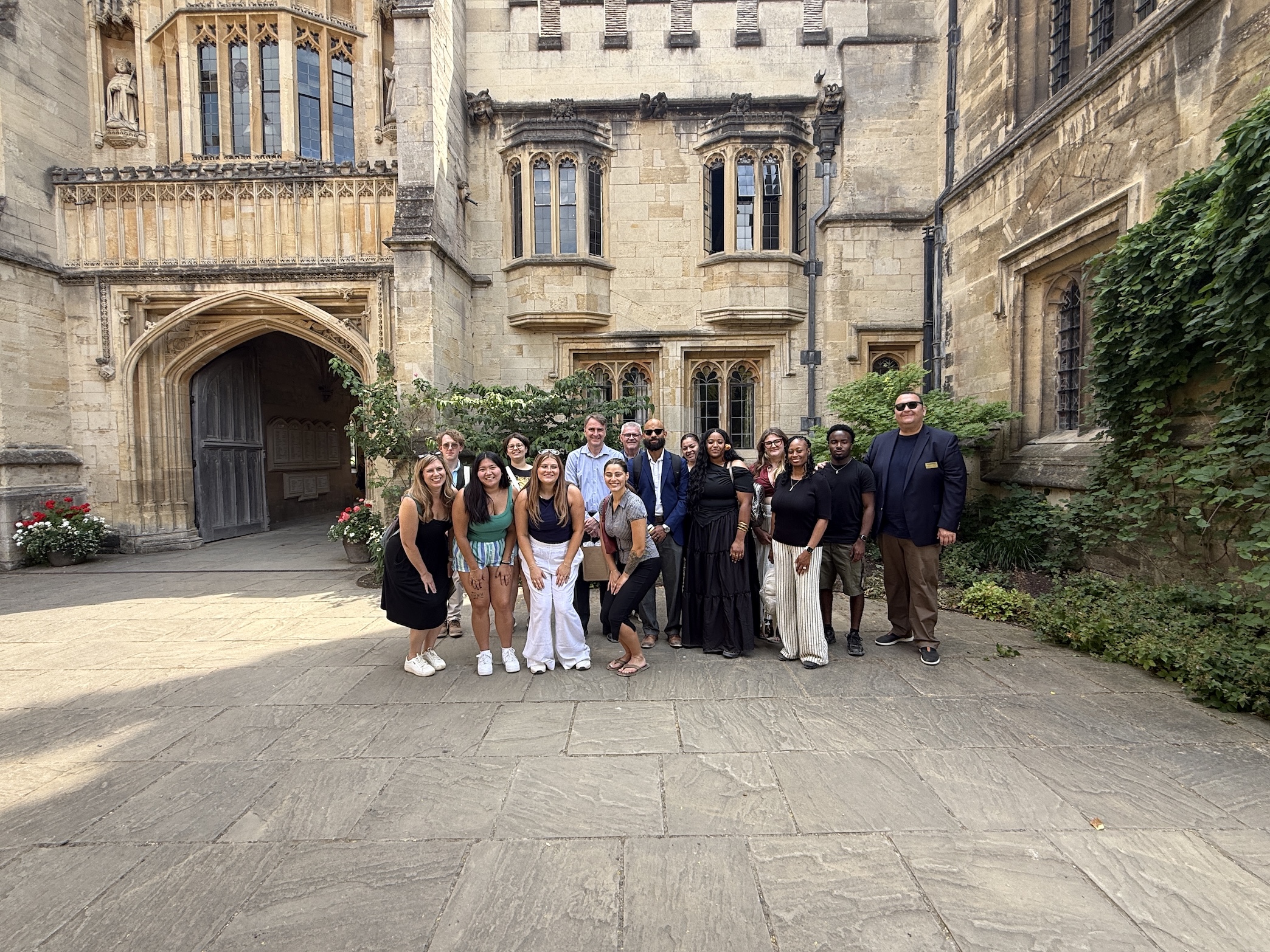
“There is something transformative about taking what students have studied in the classroom and allowing them to experience it in the places where that history unfolded,”; Petrov said. “They weren’t simply reading about Lewis. They were walking through his colleges, visiting his home and engaging with scholars who have devoted their careers to studying his work. Those experiences invited students to make deeper connections, ask different questions and see their learning — and the world around them — in new ways.”;
For Maddison Coleman, a freshman biology major, what she brought home extended well beyond the subject matter of the course.
“I went to England to study C.S. Lewis, but I came home having learned just as much about life, faith, gratitude and myself,”; Coleman said.
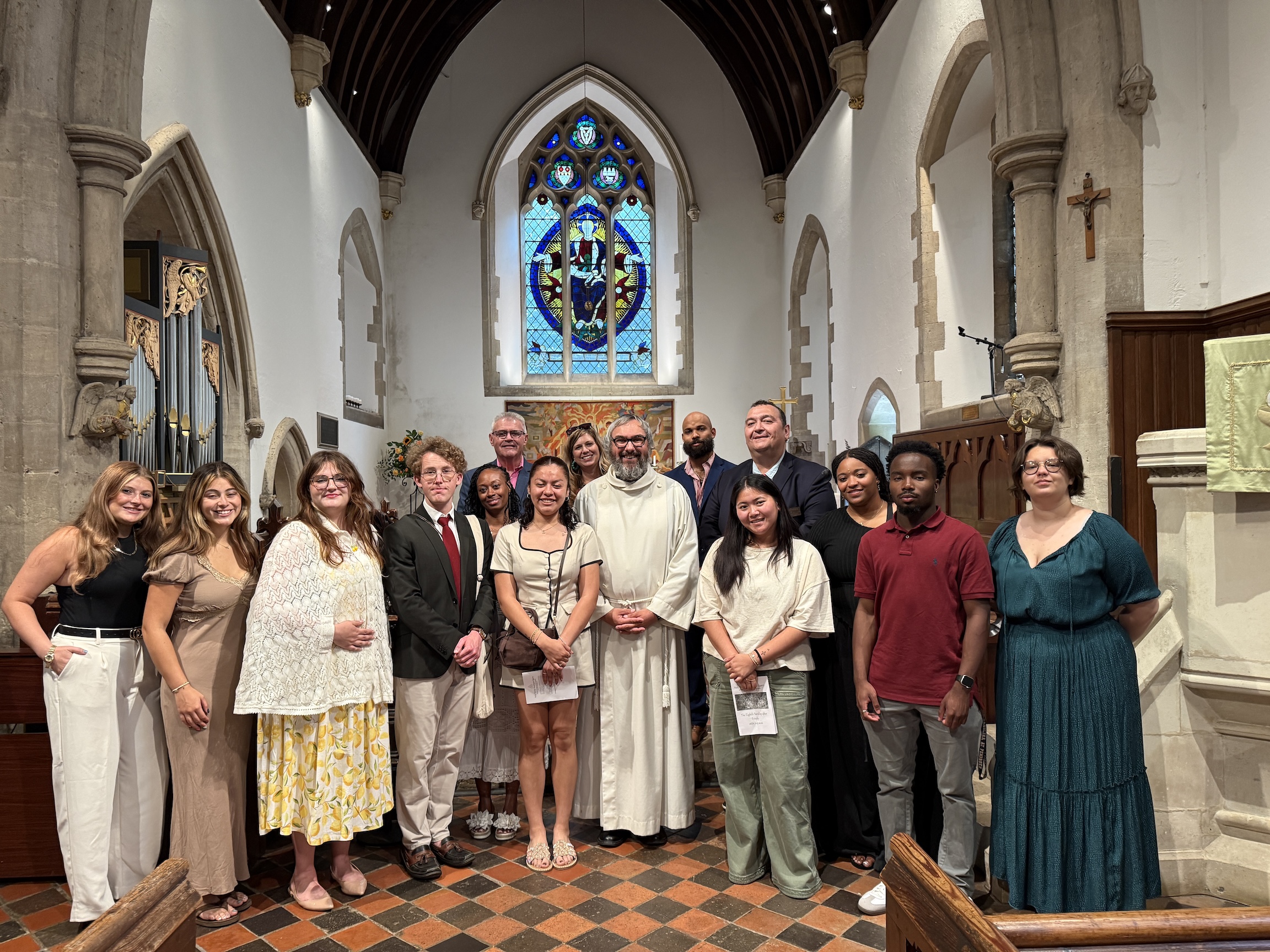
The journey began in Oxford, where Lewis lived and taught for much of his academic career. Students visited Magdalen College at the University of Oxford, where Lewis served as a fellow and tutor in English, as well as The Kilns, his Oxford home. They also visited Holy Trinity Church in Headington Quarry, where Lewis worshipped and preached.
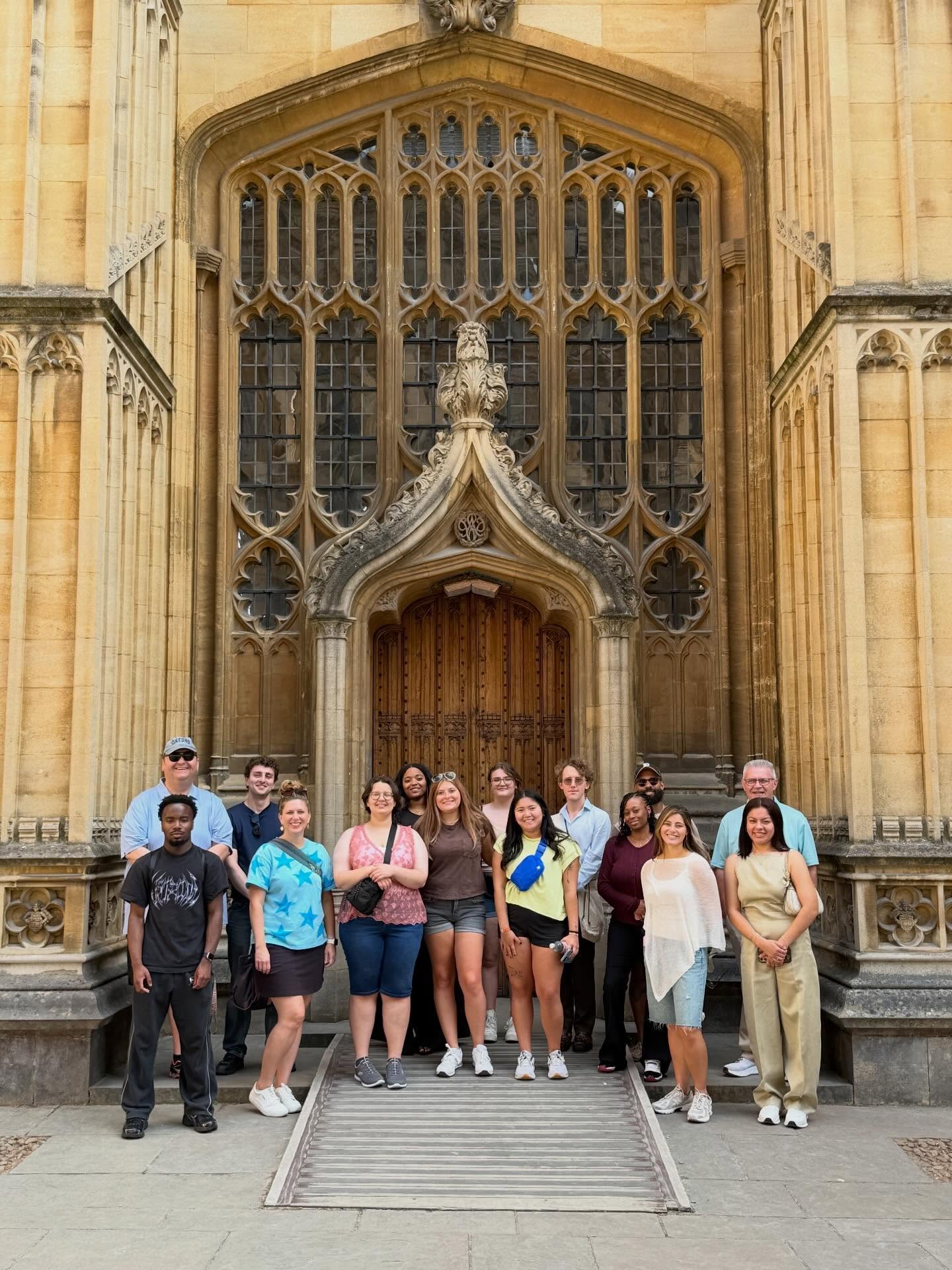
One of the highlights was a meeting with Professor Simon Horobin of Magdalen College, University of Oxford, a leading scholar of Lewis and author of C.S. Lewis’ Oxford. Horobin discussed Lewis’ life, scholarship and relationship with Oxford, giving UNCP students an opportunity to engage directly with a scholar whose work focuses on the author they had spent weeks studying. He also signed copies of his book for the students.
Daphne Sabo, a freshman studying special education, said that experiencing the places associated with Lewis changed how she understood his work.
“Seeing these places in person gave me a better understanding of Lewis beyond his books and showed me how much a person’s surroundings, relationships and experiences can shape their work,”; Sabo said. “What I had learned in the classroom felt much more real on this trip, and now I have memories that will last a lifetime.”;
From Oxford, the group traveled to Cambridge, where students visited Magdalene College and saw Lewis’ former office, further connecting their coursework with his academic life.
The final portion of the journey took students to London, where they explored some of the city's most significant historical and cultural landmarks, including Westminster Abbey, Big Ben, St. James's Park and Buckingham Palace.
The visit broadened the course beyond Lewis, giving students an opportunity to experience British history and culture within the larger context they had been studying.
Robert Stewart, a senior studying philosophy and religion, said the experience was as personal as it was academic.
“The C.S. Lewis study abroad trip was one that left me spiritually nourished and intellectually satisfied,”; Stewart said. “Along with the camaraderie and friendships that were made, I believe each of us came home a little different than when we left.”;
The course concluded with a farewell dinner at Ye Olde Cheshire Cheese, one of London's historic pubs long associated with literary figures, including Charles Dickens and Alfred, Lord Tennyson.
For Audra Wike, a senior also studying philosophy and religion, seeing the settings of Lewis’s life offered an unexpected lesson about how significant work can begin in seemingly ordinary circumstances.
“This trip taught me that extraordinary things can come from ordinary places and ordinary people,”; Wike said. “Sitting at C.S. Lewis’ desk and walking through the places where he lived, studied, taught, and wrote made me realize that his incredible legacy began in the ordinary moments of his life.”;
For Coleman, traveling abroad also changed her perspective beyond the classroom.
“It made me realize how small so many of our worries can feel when we step outside of what we have always known and see just how vast and beautiful the world truly is,”; she said.