UNCP Students Unearth Untold Stories at the Library of Congress
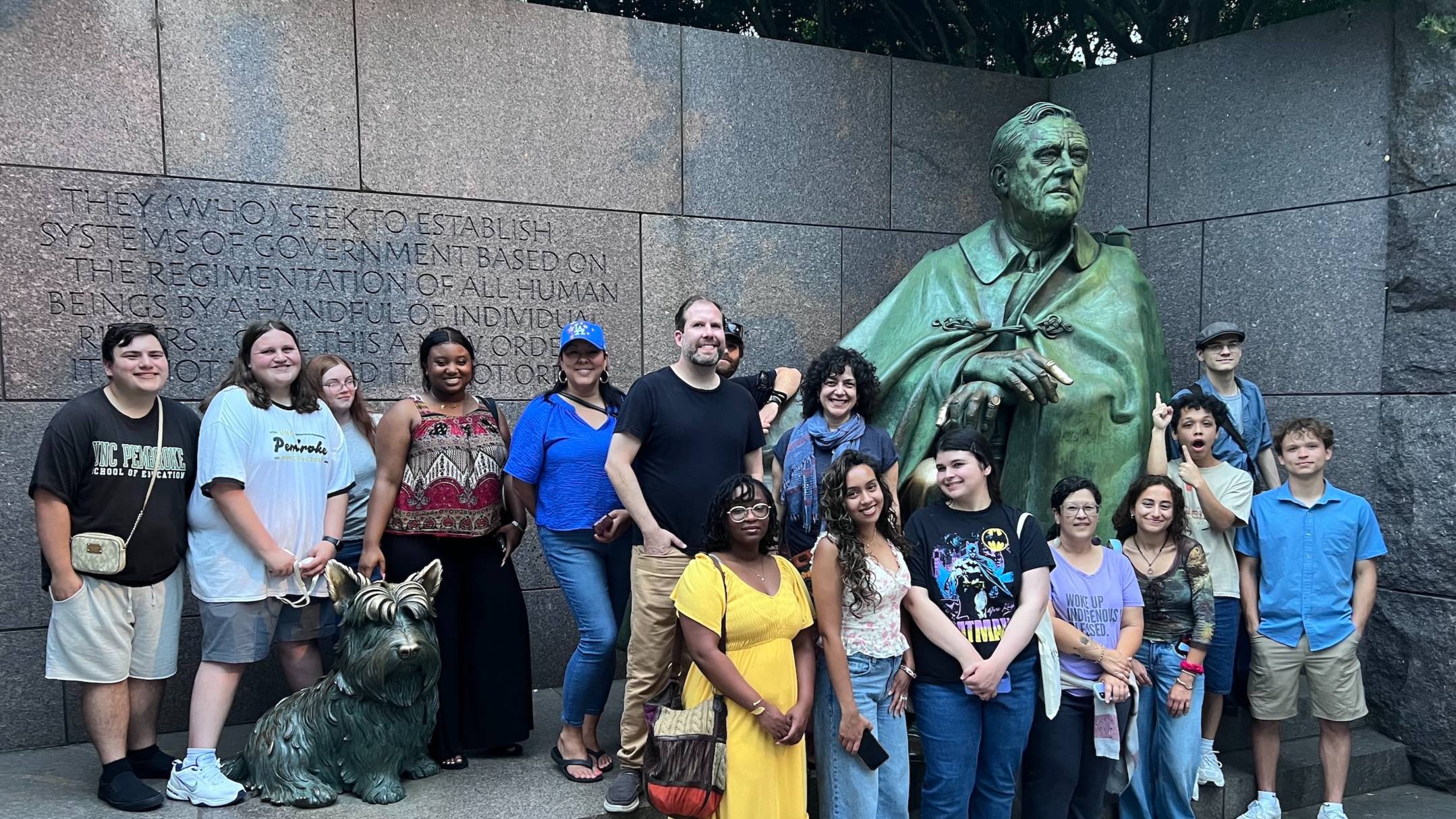
As Jacob Worriax carefully turned the pages of archival documents inside the Library of Congress, he realized he was likely among the first people to examine some of the materials in decades.
Among thousands of manuscripts documenting American life during the Great Depression, the UNC Pembroke junior kept encountering references to Lumbee folk hero Henry Berry Lowrie — an unexpected discovery that rewarded days of patient research.
“It was a lesson in perseverance,” Worriax said. “I kept searching, and during the last two days I started seeing references to Henry Berry Lowrie appear. That’s when I realized all the work had been worth it.”
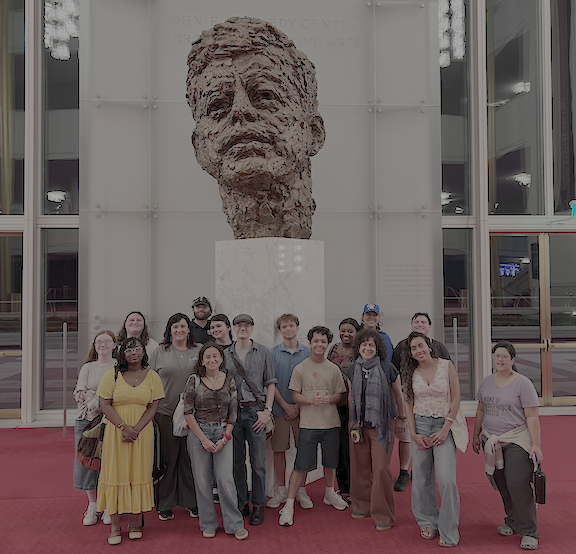
Worriax was joined by 11 fellow undergraduate researchers in UNC Pembroke’s REACH (Research, Engagement, Action, Community and Humanities) program for a weeklong research experience at the Library of Congress in Washington, D.C. The trip represented the culmination of an intensive four-week summer program that immersed students in archival research, archaeology and Lumbee history.
Funded by the Mellon Foundation, REACH provides students hands-on experience in archival research, digital humanities, public history and cultural preservation. Fellows work closely with faculty mentors to develop projects tied to race, identity, labor, language, place and the historical records that shape how communities are remembered.
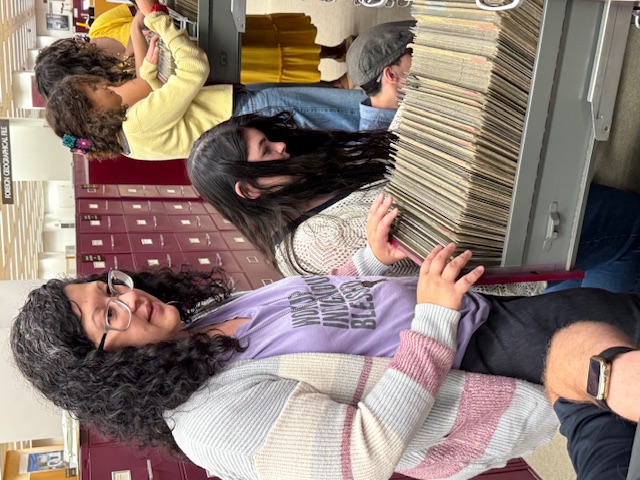
Directed by Dr. Michele Fazio, professor of English and director of REACH, the program prepared students to conduct original research using one of the world’s largest archival collections.
Throughout the summer, students examined Federal Writers’ Project (FWP) and Farm Security Administration photographs, manuscripts and oral histories documenting Robeson County and the Lumbee people. They participated in archaeological fieldwork at the Buie Mound alongside Appalachian State University anthropologist Dr. Seth Grooms, explored collections at the Museum of the Southeast American Indian .
“We wanted students to explore the FWP and Farm Security Administration photographs as a point of departure,” Fazio said. “They examined how Robeson County and Lumbee history were documented, but also how those records sometimes misrepresented Indigenous people because many of the writers and photographers lacked an understanding of the communities they were documenting.”
That work asks students to do more than read history. They examine what was recorded, question what may have been misunderstood or omitted, and add context that can help produce a fuller account of the people and communities represented in the archives.
Students spent six to eight hours each day working through archival boxes, photographs and manuscripts before gathering to discuss their discoveries and refine individual projects.
Worriax, a history and American Indian studies double major and member of the Lumbee tribe, said the research carries significance beyond academics.
“The main project is directly helping Lumbee people — not just the tribe, but actual families,” he said. “We’re identifying ancestors who were photographed but never properly identified. Their names weren’t recorded, and that has real implications today. This isn’t just research that helps my résumé. It will impact my community and my people forever."
Senior English Literature major Jayden Emanuel examined how Native people were represented in FWP documents, comparing those portrayals with interviews collected decades later by Lumbee historian Lew Barton.
“It was one of those moments that's hard to describe,” Emanuel said of working at the Library of Congress. “You feel privileged and grateful to be there. Dr. Fazio trusts us to develop projects we're passionate about, and that means a great deal.”
Her research also gave Emanuel an opportunity to examine historical representations of her community through a different lens.
“Studying these documents validates that we've always been here and we've always had a culture and heritage,” Emanuel said. “In many of the early state guides, Lumbees were described as if we weren’t a real tribe. Being able to study these records and hear Lumbee voices from that time is empowering.”
History major Bryan Ramirez-Jackson found himself immersed in documents that had remained untouched since the late 1930s.
“It was an extraordinary experience,” Ramirez-Jackson said. “You're requesting boxes that haven't been opened in decades. The collection I was working with contained music, folklore, recipes and dialect from the Great Depression. It gave me a glimpse into how people thought and lived during that period.”
For Ramirez-Jackson, preserving those records and the Indigenous histories within them remains essential.
“This is a continuation of the fight for recognition — not only for the Lumbee people but for Native Americans everywhere,” Ramirez-Jackson said. “These histories matter because the families and communities they document still exist today.”
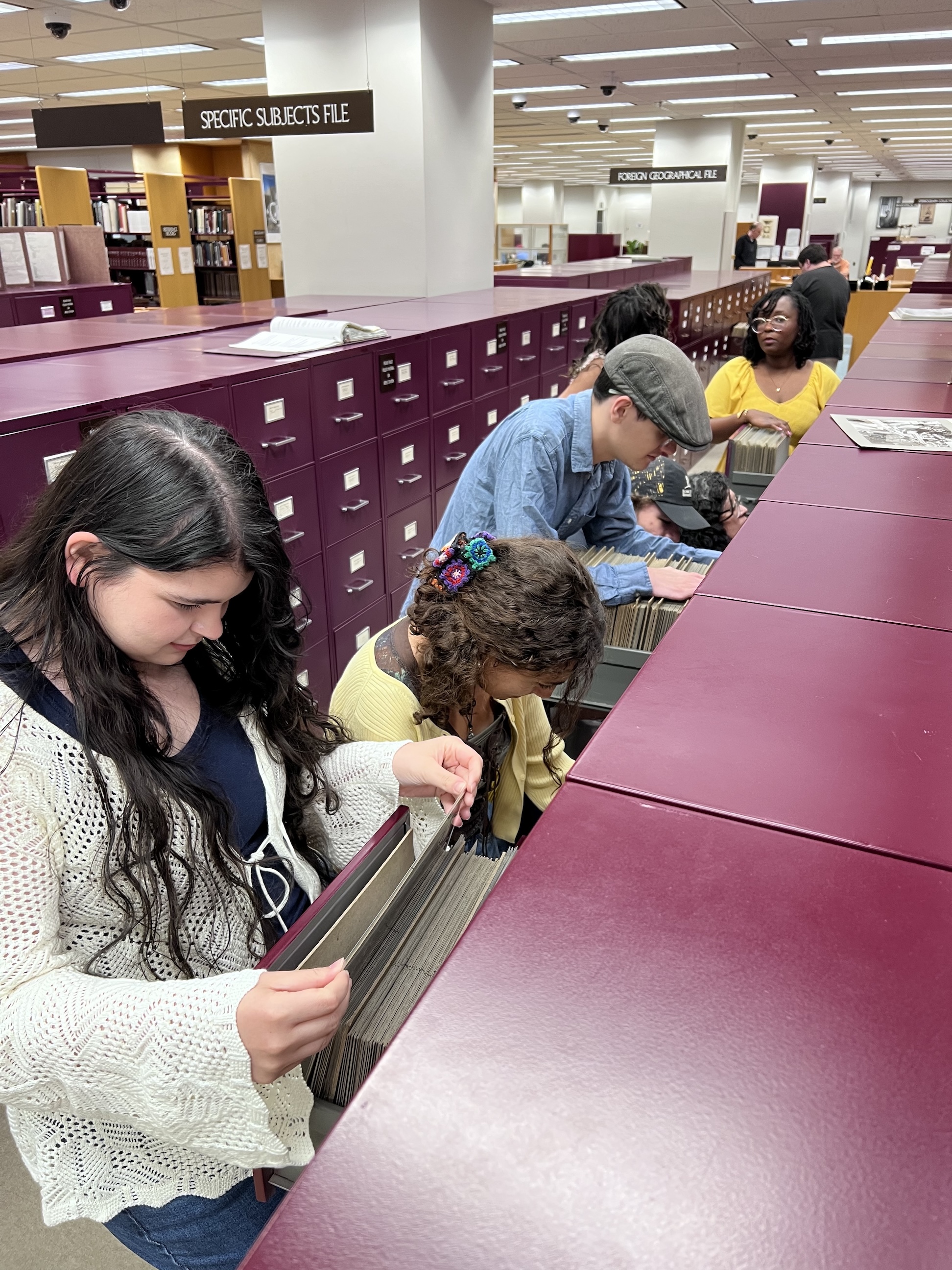
The caliber of the students’ works also put them in conversation with scholars from across the country this summer. During the 2026 National Endowment for the Humanities Summer Institute for Higher Education Faculty on “The Federal Writers’ Project: New Directions for Teaching, Research, and Public Engagement,” Fazio invited four REACH scholars to present their research to faculty from colleges and universities nationwide.
REACH alumni Sheena Holbrook and Mason Schwenneker joined current students Anastasia Sinclair and Jackson Mossolle in presenting projects spanning
Indigenous history, digital humanities, desegregation and representations of Pembroke and Robeson County.
Holbrook, now a graduate student at the University of Maryland, discussed her archival work on Indigenous communities in the Southeast. Schwenneker presented research that combined digital humanities with the labor songs performed by author Zora Neale Hurston. Sinclair shared her digital story map on the NAACP’s role in the desegregation of Caswell County, while Mossolle presented a project that reexamined how Pembroke and Robeson County were portrayed in the North Carolina State Guide .
"Watching these students present their work on the FWP at the Library of Congress and engage with leading scholars was one of the most rewarding aspects of the summer institute,” Dr. Sara Rutkowski, co-director of the NEH Summer Institute, said. “As dynamic, active contributors to this intellectual community, they offered us a live demonstration of how important undergraduate research is to prepare future scholars and advance the humanities."
Fazio said the faculty's response underscored the sophistication of the students’ work.
“It was a tremendous opportunity for them to network and demonstrate what they've learned through REACH,” she said. “Faculty from across the country kept telling me they couldn't believe undergraduate students were doing this caliber of research in the public humanities. I was incredibly proud to see them thriving in those professional settings.”
The experience is also helping students see how undergraduate research can lead to graduate education and careers in museums, archives and academia.
“REACH gives them space to imagine where they can go and what they can accomplish,” Fazio said. “They begin to see themselves as graduate students, museum professionals, archivists and scholars.”
For Worriax, the summer confirmed that his future lies in the kind of work he was already doing inside the Library of Congress.
“My long-term goal is to become a professor,” he said. “Being able to work with documents that maybe no one had touched in 50 years — I have never felt like a bigger nerd in my life, but I loved every minute of it. REACH confirmed this is exactly what I want to do.”