UNCP Lands Nearly $5 Million to Advance AI, Transform Student Success
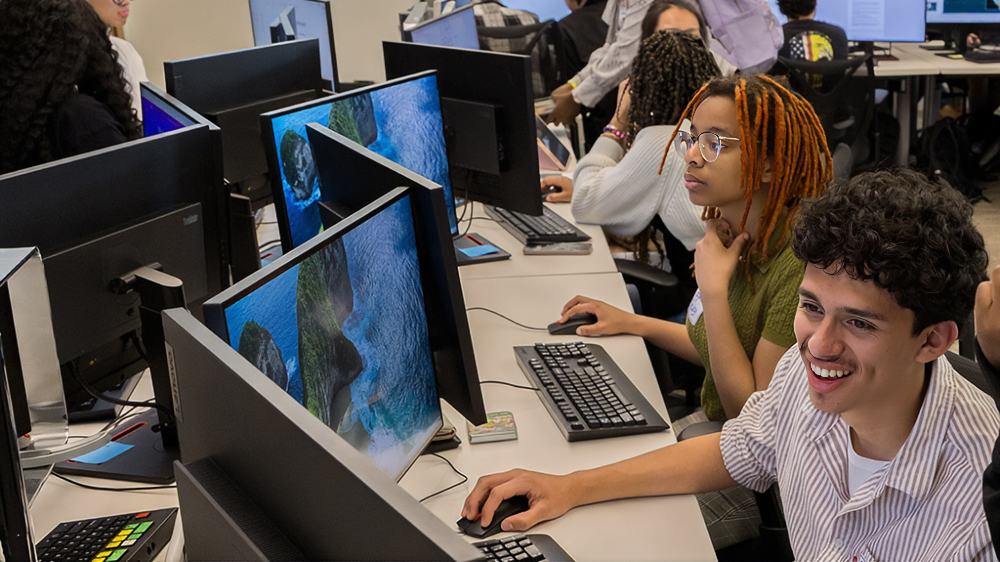
UNC Pembroke has received nearly $5 million from the U.S. Department of Education to transform the student experience through human-centered artificial intelligence, creating new ways for students to learn, access academic support and navigate their path to graduation.
The $4.935 million, five-year grant will also establish a new AI Innovation Lab, giving students and faculty hands-on access to emerging technology while creating a campus hub for AI-enabled teaching, learning and research.
Awarded through the Department of Education’s Title III Strengthening Institutions Program (SIP), the Cooperative Arrangement Development Grant, the project is a university-wide initiative that brings together technology, course redesign and coordinated student support.
For students, the investment will mean earlier assistance when they encounter academic challenges, stronger connections among advising and support services and more opportunities to develop the skills increasingly important in the workplace. For southeastern North Carolina, it will help build a stronger pipeline of college graduates prepared to contribute to the region’s workforce and economy.
“Over the past several years, UNCP has made significant investments in technology because we know the right tools, paired with the right support, can make a meaningful difference in student success,” Chancellor Robin Gary Cummings said. “This grant builds on that foundation by bringing together technology, innovative teaching and the personal support our students need to thrive.”
“By investing in the ways we teach, advise and support students, we are creating a more connected and responsive experience that helps students overcome barriers, stay on track and reach their goals,” Cummings said.
The initiative addresses several priorities identified through UNCP’s strategic plan, Vision 2031, including student performance in high-enrollment gateway courses, progression to sophomore standing, retention and graduation. It also supports the focus on academic excellence and innovation, economic impact, and community engagement.
A central component will be an Integrated Student Success Model that brings advising, tutoring, career development and other academic support services together through coordinated student success teams. AI-enabled tools will help those teams identify students who may need additional support earlier and connect them with appropriate resources.
“Our goal is not simply to introduce new technology. It is to build a stronger, more coordinated model of student success — one that combines the expertise of our faculty and staff with emerging tools, improves the way students experience their gateway courses and equips our graduates with the skills they will need in a rapidly changing workplace,” said Dr. Nicole Lucas, associate vice chancellor for Faculty Affairs, who serves as principal investigator for the grant.
“The human-centered approach to our integration of technology ensures that we are helping students grapple with the larger questions surrounding AI use at school, in the workplace and in our communities,” Lucas said.
UNCP will also redesign ten high-impact gateway courses, including courses in English, mathematics, biology, accounting, and education. These foundational courses can play an important role in a student’s confidence, academic progress and decision to remain in college.
Faculty will partner with Gardner Institute’s Course Redesign Project to identify barriers to student success and develop new approaches that make course content more engaging, accessible and relevant. The redesigned courses will incorporate AI literacy, career-connected skills and workforce preparation, helping students connect what they learn in the classroom with how that knowledge can be applied in their careers.
The ten courses are intended to serve as a model that can be expanded across other academic programs, extending the project’s impact to more students over time.
The new AI Innovation Lab in Thomas Hall will provide a hub for AI-enabled teaching, learning and research. Renovated and equipped through the grant, the lab will give students hands-on experience with emerging technologies while providing faculty space to explore new teaching strategies and responsible uses of AI.
Faculty will receive support to redesign courses, build AI literacy and competency frameworks, explore responsible uses of AI in teaching and better connect classroom learning with skills students will encounter in the workplace.
The grant’s reach will extend beyond the UNCP campus through an expanded partnership with Robeson Community College. The two institutions will work together to strengthen the path for students moving from a two-year degree into a bachelor’s degree program.
“This partnership recognizes something we've known for a long time — many of our students don't see RCC and UNCP as separate destinations. They see both institutions as part of the same educational journey,” Dr. Greg Thomas, vice president for Instruction and Chief Academic Officer at RCC.
“When our institutions work together, we make that journey smoother by helping students move more easily from community college to a bachelor's degree and beyond, while creating opportunities for faculty to learn from one another and stay current in areas like artificial intelligence and emerging teaching practices,” Thomas said. “At the end of the day, it's about removing barriers, creating opportunities and giving students the best possible chance to succeed in college, in their careers, and in their lives.”
UNCP and RCC will collaborate on gateway-course alignment, strengthen articulation and transfer pathways, faculty development and AI literacy.
RCC faculty and students will also have access to UNCP’s AI Innovation Lab and shared professional development opportunities.
The partnership is designed to help students complete applicable foundational coursework before transferring to UNCP and continue successfully toward a bachelor’s degree. By reducing academic and administrative barriers, the institutions aim to help more local students complete their degrees and enter high-demand careers without leaving the region.
Successful practices developed through the project will be incorporated into university operations, allowing the work to continue beyond the federal grant period and extend its impact to future generations of students.
“This is particularly important for the region we serve,” said Dr. Diane Prusank, provost and vice chancellor for Academic Affairs. “UNCP and RCC share students and a responsibility to create educational pathways that lead to meaningful opportunity. By approaching this work together, we can strengthen the entire pathway from community college through bachelor’s degree completion and into the workforce.”