UNCP Ranked No. 1 in North Carolina for Serving Rural America
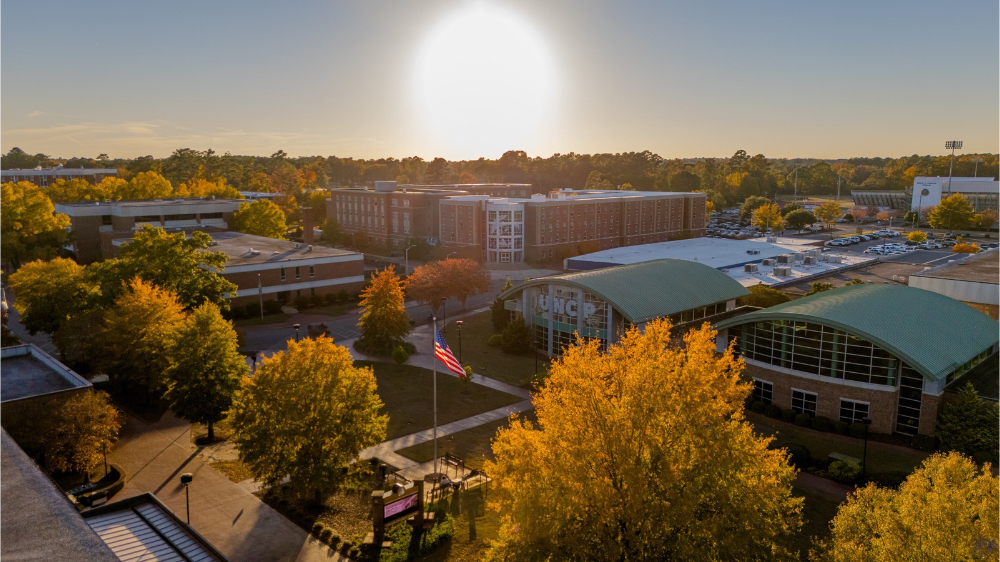
UNC Pembroke placed No. 15 nationally and No. 1 among North Carolina universities in Washington Monthly ’s inaugural Best Colleges for Rural America list. The prestigious ranking recognizes UNCP’s success in expanding opportunity for rural students and strengthening the communities it serves.
The university also ranked No. 25 in the Southeast in Washington Monthly’s 2026 Best Colleges for Your Tuition (and Tax) Dollars ranking and No. 3 among North Carolina public universities, behind only UNC-Chapel Hill and UNC Greensboro. The ranking reflects an institution’s contributions to the public good through access, affordability, outcomes and public service.
“People in rural areas have extraordinary talent. They need opportunities to develop that talent, build careers and strengthen the place they call home,” Chancellor Robin Gary Cummings said. “That is the role UNCP has served for generations. We are educating students who understand their communities because they come from them — and who are prepared to become the teachers, healthcare providers, entrepreneurs and leaders who will shape the future.”
Washington Monthly based its new ranking on findings from the Alliance for Research on Regional Colleges ’ Rural-Serving Postsecondary Institutions project . The research defines rural-serving institutions as those whose students reflect the communities they serve and whose academic programs and community engagement demonstrate a deep commitment to those places.
Washington Monthly applied the rural-serving distinction by evaluating access, affordability and student outcomes, along with the number of graduates prepared to address the region’s most pressing talent gaps.
In practice, that commitment means enrolling significant numbers of Pell-eligible students and maintaining low net prices so students can graduate with minimal debt.
“Rural-serving institutions tend to enroll higher percentages of rural, first-generation and Pell-eligible students,” said Cecilia Orphan, PhD, founding co-director of the Alliance for Research on Regional Colleges and an associate professor of higher education at the University of Denver. “They also focus on preparing graduates for careers that strengthen the health and economy of their region, and they engage faculty and students in work that responds to local challenges.”
At UNCP, 63% of undergraduates come from rural counties, 51% are Pell-eligible and 37% are first-generation college students.
For Orphan, the new ranking offers a way to recognize institutions whose contributions are not always captured by traditional measures of college prestige.
“Historically, we have these really strange ways of measuring quality and excellence that are misaligned with the mission of regional, rural-serving colleges and universities that define educational excellence through access and service,” Orphan said. “We want a system that is accessible and that changes people’s lives, but too often those are the universities that are overlooked.”
At UNCP, that mission is reflected in academic programs designed to meet regional workforce needs.
“Preparing students for successful careers is only part of the equation,” Provost Diane Prusank said. “We are looking closely at what our state needs and building academic programs that respond. When a graduate chooses to teach in a rural school, provide healthcare in an underserved community or bring new expertise to a local employer, the impact of that education multiplies.”
Charles Welch , president of the American Association of State Colleges and Universities , told Washington Monthly that regional universities play a dual role: They prepare residents for well-paying careers near home and help communities compete for new investment. Employers considering a move want confidence that they can hire skilled workers, he said. Their central question is: “Can you provide an educated and trained workforce for us?”
A strong university presence helps rural communities say yes.
Healthcare is among North Carolina’s most pressing challenges. The state is home to more than 4.6 million rural residents — the second-largest rural population in the nation — and 91 of its 100 counties face shortages in primary care, dental or behavioral healthcare, according to the N.C. Department of Health and Human Services . Rural residents also experience nearly twice as much difficulty accessing healthcare services as their urban counterparts.
In response, UNCP has expanded its health sciences offerings by adding its first doctoral program, the Doctor of Nursing Practice, as well as a Family Nurse Practitioner track within the Master of Science in Nursing, an RN-MSN pathway, a Master of Healthcare Administration and a Master of Science in Occupational Therapy.
For Alexis Little, serving rural communities means coming home. A Robeson County native, Little earned her undergraduate degree from UNCP and a seat in the physician assistant program at Methodist University.
"I've always known I wanted to be a public servant and, as a physician assistant, I can offer people in my community a better quality of life through healthcare,” Little said.
UNCP’s impact on another critical workforce — educators — is also visible across southeastern North Carolina. Of the 279 graduates of UNCP’s Master of School Administration program now serving as principals or assistant principals statewide, 181 — nearly two-thirds — work in the Southeast region, and nearly 9 in 10 serve in Title I schools.
But Orphan said the role of a rural-serving university extends well beyond the professionals it prepares.
“These institutions are vital to the well-being of their communities,” Orphan said. “They support small businesses and civic life while often providing access to arts and culture through the area’s only museum or performing arts center.”
At UNCP, the Museum of the Southeast American Indian and Givens Performing Arts Center bring exhibitions, performances and cultural programming to the campus and surrounding region.
And the university’s students and faculty serve the region through initiatives such as the McKenzie-Elliott School of Nursing’s mobile health units, which bring health education and services directly to communities, and the Thomas College of Business and Economics’ free Volunteer Income Tax Assistance program, which helps eligible residents prepare and file their tax returns.
For rural students, nearby institutions provide a crucial pathway to higher education. Nationally, two-thirds of students who attend college do so within 50 miles of home. Without these institutions, Orphan said, some might not attend at all — a gap Cummings said UNCP has a responsibility to help close.
“Talent is everywhere, but opportunity is not,” he said. “Our responsibility is to close that gap by providing an affordable, high-quality education that prepares graduates for fields where they are needed — putting more teachers in our classrooms, more healthcare providers in our communities and more talented people to work across North Carolina.”